Your fleet won't stall on the road. It stalls in the lot. That's the plain truth most fleet buyers miss. Most fleets obsess over trucks and vans. That is backward. The panels, wiring, and permits behind those vehicles decide if your fleet runs on time. Get your EV infrastructure right, and the vehicles take care of themselves.
EV infrastructure is basically all the stuff that moves power out of the grid and over to a battery. So, it includes the panel and the wiring, then the chargers too, plus the permits which are not optional, and also the whole arrangement you make with your power company. It is not just the box on the wall.
A charger is the part you see. Behind it sits a chain of choices about power, timing, and cost. Most buyers never think about that chain until something breaks. Skip one link and your chargers turn into expensive paperweights.
Fleets chase vehicles first because vehicles feel real. You can test drive a van. You can read a specification sheet and can compare range numbers over coffee.
EV infrastructure stays invisible until it fails you. Nobody gets excited about a panel upgrade. That gap in excitement is exactly why fleets order electric vehicles first. Then they find out the site can not power them.
Start with a real number, not a guess. A 200-amp panel gives you about 40 kilowatts of power. That covers two or three chargers running at once. Nothing more.
Ten chargers together need close to 190 kilowatts. Most buildings are wired for lights, not a whole fleet. So, bring in an electrician first and get your power checked before ordering even a single vehicle.
Longer than you think. Power upgrades and permits often take twelve to eighteen months. That clock starts the day you call your power company. It does not start the day your vehicles show up on a truck.
Fleets that order vehicles first end up with electric trucks parked next to an empty trench. The vehicle showed up early. The power did not.
Think of it like buying a boat before building the dock. The boat is fine. It just has nowhere to go.
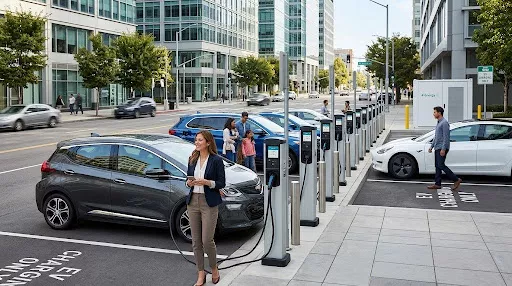
That's what weak EV infrastructure looks like in real life. Drivers come back at shift change. Seven chargers can't cover eleven vehicles that all need power by morning.
Demand spikes push you into a pricier rate tier. Panels sized for today get torn out and redone later. That redo often costs two or three times the original price.
None of that touches the vehicles. All of it touches your budget.
Flip the usual order. Infrastructure first. Vehicles second.
This sequence is not glamorous. It works.
If you take one line from this article, make it this one. Call your power company before you call a dealer. Every part of your EV infrastructure plan depends on what your site can support right now.
Vehicles get all the attention. Infrastructure decides whether those vehicles work for your operation at all. Before you sign for a single electric truck, van, or utility vehicle, get a straight answer first. Find out what your depot can support today and what it needs next year.
Fairway EV works with commercial fleets across Northern California on exactly that groundwork. We match electric trucks, vans, and utility vehicles to sites that are ready to power them. Talk to us before you place an order, not after.
Costs shift with site condition and panel size. A light upgrade can run a few thousand dollars. A full service upgrade with several chargers can top $100,000 for larger sites.
Most overnight depot charging works fine on Level 2 chargers. DC fast charging suits vehicles that need a quick boost mid-shift. It demands far more electrical power per port.
Simple installs with spare power on site can wrap up in a few months. Projects needing a utility upgrade often run twelve to eighteen months from first contact to sign-off.
Sometimes, if your site already carries spare capacity. Most business depots don not, since older panels were sized for lights and office gear, not a fleet charging overnight.
Ordering vehicles before confirming site power. Vehicles can sit on a lot for weeks while utility upgrades and permits catch up. That delay is almost always avoidable.
Diversity Supplier Participant


© Fairway EV. All rights reserved


