
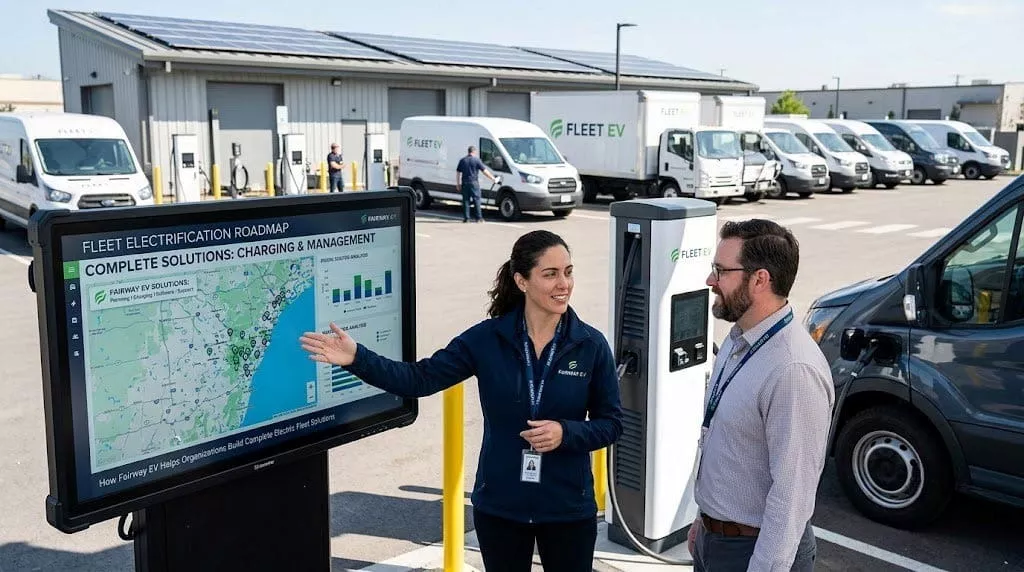
Stop treating fleet electrification like it is just a car buying decision. The orgs that actually make it work tend to tie together vehicle sourcing and charging infrastructure, they also handle funding navigation, custom upfitting, and even ongoing maintenance all under one coordinated plan; not four separate vendors, trading blame when something breaks.
Picture this. A district orders twelve electric buses, feels great about the press release, then discovers the electrical panel at the bus yard can't handle simultaneous overnight charging. Now the buses sit. Drivers grumble. Someone in facilities is on hold with the utility company for six weeks trying to schedule a service upgrade that should have happened before the purchase order got signed.
That's not a hypothetical. That's the default outcome when vehicle procurement and charging infrastructure get planned by two departments who never talk to each other.
Fleet electrification isn't a purchase. It's a sequence. Skip a step and the whole thing stalls, sometimes for months, sometimes for a full budget cycle you don't get back.
Ask ten vendors this question and you'll get ten different answers, most of them self-serving. Here's the honest version, stripped of sales language.
A real electric fleet solution covers four things, and none of them work without the other three:
Miss the charging piece and you've got expensive vehicles collecting dust. Skip the funding piece and you're paying full price for equipment that qualifies for six figures in rebates. Ignore maintenance and your battery packs degrade faster than they should, and nobody notices until range starts dropping mid route.
Here's the reality: most fleets end up buying these four pieces from four different companies. That works, sometimes. But it also means four different timelines, four different points of failure, and nobody accountable for the whole picture when things go sideways.
| Fragmented Approach | Coordinated Approach |
|---|---|
| Vehicle vendor, charging installer, and grant consultant work separately | One partner sequences vehicles, chargers, and funding together |
| Timeline set by whichever vendor is slowest | Timeline set by the actual rollout plan |
| Nobody owns battery health after the sale | Maintenance tracked from delivery onward |
| Incentive deadlines get missed or discovered too late | Funding stacked and applied before purchase |
Private fleets can move fast. A delivery company can swap five vans without asking anyone's permission. School districts and transit agencies can't. There's a board vote, a bond cycle, and a procurement process that takes longer than the electrification itself.
And routes matter more here than almost anywhere else. A rural district running forty mile bus routes through hill country has completely different range needs than an urban transit agency running twelve mile loops all day. Cold weather cuts range further still, which matters a lot if your district is where winters actually happen.
Since public funds are involved every call gets watched, even when it feels minor. And because that watching tends to slow the whole process down, the planning stretch has to be stricter, not looser. If you skip steps right here it doesn’t only cost money; it costs public trust, and that's harder to rebuild than a charging station.
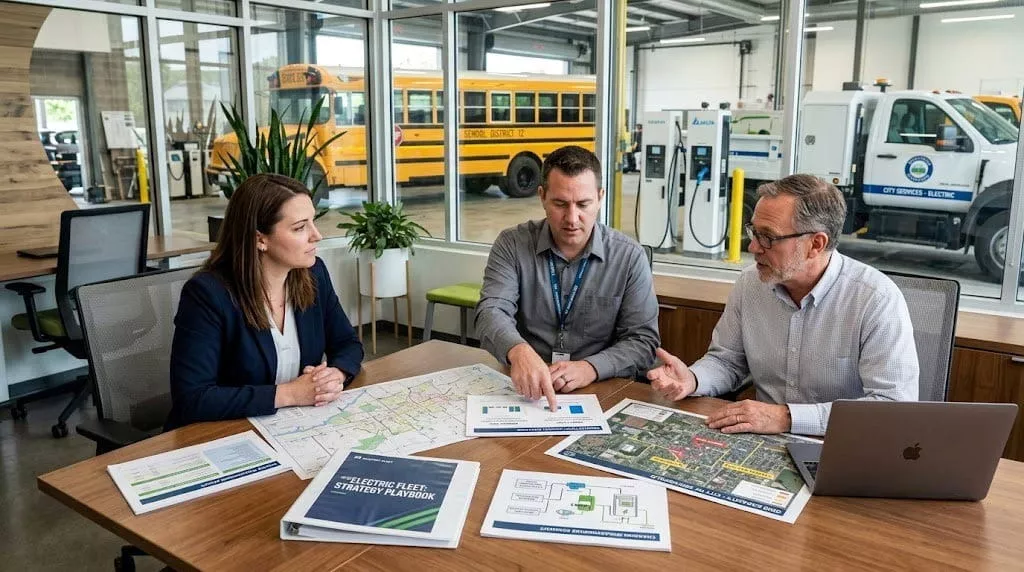
Electric vehicles cost more upfront. Anyone telling you otherwise is selling something. But the total cost of ownership conversation usually stops there, and that's where it gets misleading.
Fuel costs drop, sometimes by more than half depending on your local electricity rates. Maintenance costs drop too, since there's no oil changes, no transmission repairs, far fewer moving parts to fail. Over five to seven years, the math often flips in favor of electric, but only if the fleet runs the way it was planned, without surprise infrastructure bills nobody budgeted for.
Battery degradation is real, yes, but it is typically slower than most people worry about. Charging costs, on the other hand, swing around more than most fleet managers think, in particular when you get hit by commercial electricity rates that jump during peak demand windows. None of this is a reason to avoid electrification. It's a reason to plan the finances as carefully as the vehicles.
This is where most electrification stories quietly fail. The ribbon cutting happens, the local news covers it, and eighteen months later half the fleet has unexplained range drops nobody diagnosed early enough.
Battery health doesn't stay steady on its own. Charging habits, weather, and driving patterns all shape how fast a pack degrades. Fleets that track this from delivery catch problems while they're still cheap to fix. The ones that don't end up replacing packs years earlier than they should.
Maintenance for electric fleets isn't the same job as maintenance for diesel fleets. It rewards teams who actually understand EV specific systems, not mechanics applying old habits to new technology.
You don't need another vendor. You need a partner who sequences the vehicles, the chargers, the funding, and the maintenance so none of it stalls out six months from now. Fairway EV has spent years building exactly that kind of complete fleet solution for school districts, municipalities, transit agencies, and commercial operators who are done coordinating four different companies for one electric fleet.
Anywhere from four months to two years, depending on fleet size, charging infrastructure needs, and how fast funding gets approved.
Yes, often through federal clean bus programs plus state and utility rebates that can cover a significant share of the cost.
Electrical infrastructure upgrades. Panel capacity and utility coordination get overlooked far more often than the vehicles themselves.
Some can, though retrofitting works best for lighter duty vehicles. Heavier or older platforms usually make more sense as full replacements.
Fewer moving parts, but battery health monitoring and charging system checks become the priority instead of oil and transmission work.
Diversity Supplier Participant


© Fairway EV. All rights reserved


