Electric vehicle fleets offer lower operating costs, cleaner transportation, and improved efficiency. However, every fleet performs best with regular care. Preventive maintenance can keep fleet managers from downtime, enhance safety, and prolong vehicle life. Rather than waiting for expensive repairs, proactive maintenance makes sure that all vehicles will be at peak performance.
Additionally, preventive maintenance helps maintain healthier batteries and enhances reliability. This equates to reduced repair expenses and greater productivity for fleets.
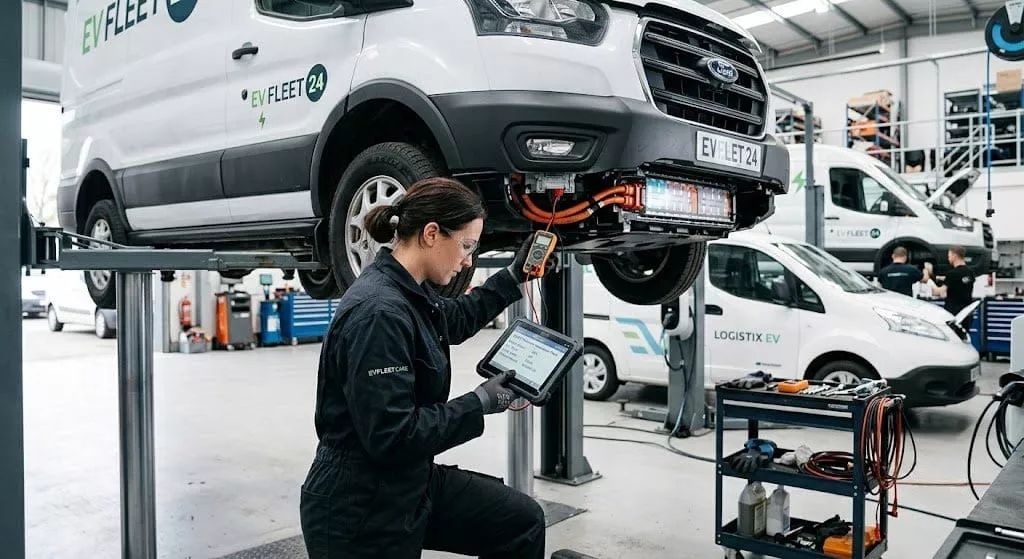
Compared to traditional vehicles, electric vehicles have fewer moving parts. They need to be inspected and serviced, on a regular basis. Each part is significant in the day-to-day activities.
Regular maintenance will help you:
Moreover, scheduled maintenance enables fleet managers to detect small issues before they become major repair jobs.
The battery is the most useful part of any electric vehicle. So, maintaining battery performance should still be a priority.
Fleet managers should:
Also, by maintaining the battery within its specified temperature range, unnecessary wear will be avoided. Good batteries perform consistently and have extended battery life.
Charging stations are as hard-working as the vehicles. It is therefore important to inspect charging equipment regularly as well.
Inspect charging systems in:
Even if there are minor charging problems, they can impact daily operations. Thus, ongoing inspections prevent charging delays and equipment failures. Reliable chargers can also help ensure that batteries are charged more healthily.
It is common for electric vehicles to exert additional torque on tires. This can cause tires to wear out prematurely.
Fleet managers should:
The right tires require the right maintenance to achieve better vehicle safety and driving range. Also, properly inflated tires result in lower rolling resistance and energy efficiency.
A large percentage of EVs employ regenerative braking. This means brake systems need to be inspected, but it can help lower the wear on the brakes.
,Regular brake service consists of:
Frequent checks ensure stopping distances are adequate in all conditions. Also, by maintaining clean brake systems, there is no need for unnecessary corrosion.
Software is the key to modern electric vehicles. Manufacturers often make efficiency and safety enhancements.
The software updates typically include:
So, it is important to perform software updates at maintenance periods for fleet managers.
New software ensures the smooth running of the fleet.
Electric vehicle batteries are kept from overheating by battery cooling systems.
The following are considered to be part of normal inspections:
Correct cooling enhances battery life and guarantees steady performance of the vehicle. Also, maintenance of the cooling system will help decrease the likelihood of thermal damage.
A fleet car travels thousands of miles annually. This means there is inevitable wear on the suspension components.
Inspect:
Suspension systems help to provide a comfortable ride and keep tires from wearing unnecessarily.
EVs are equipped with sophisticated electric systems, which must also be inspected from time to time.
Technicians should examine:
Early detection helps avoid unplanned failures and enhance fleet reliability. Regular inspections also enhance driver safety.
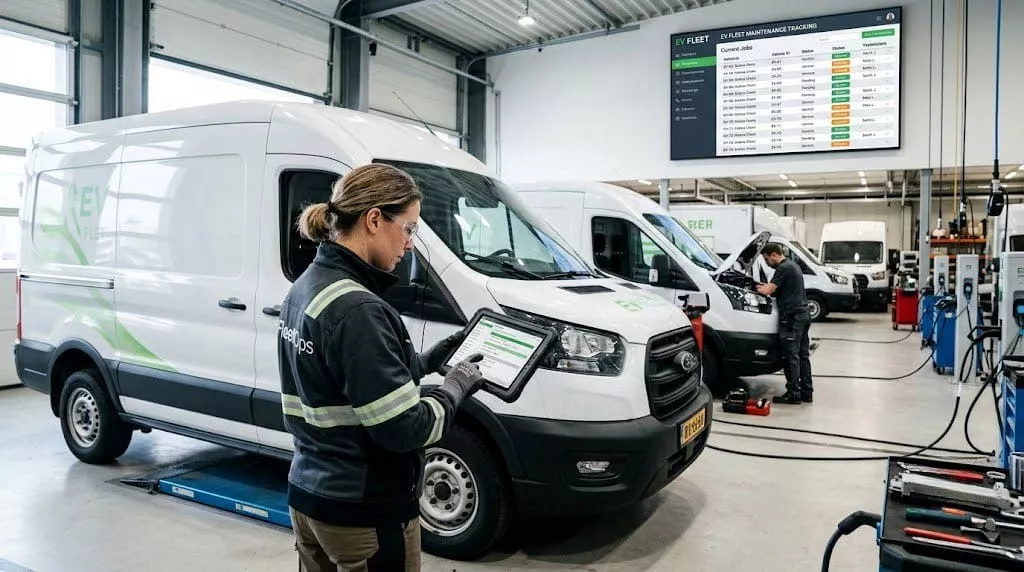
Electric vehicles contain advanced electrical systems that require periodic inspections.
Technicians should examine:
This results in better-organized and more predictable maintenance. Data-driven decision-making also enriches fleet planning for the future.
Drivers have a direct impact on the length of an EV's service life. Thus, driver education helps to facilitate preventive maintenance.
Encourage drivers to:
The driving habits, in turn, mitigate wear all around the vehicle. Also, well-informed motorists can help to uncover issues in advance before they escalate.
A maintenance plan for every fleet vehicle is essential for a structured plan. The simplest maintenance schedule contains:
A regular timetable will reduce unplanned shutdowns.
Preventive maintenance creates measurable business benefits.
These include:
Additionally, well-kept fleets provide superior customer service as vehicles are available when they are required. Preventative care also helps you save your investment for years.
If you are planning to expand your EV fleet, Fairway EV can help. Fairway EV has partnered with Load Study EV to help you determine your power needs to install EV Chargers to support your electric vehicles. Contact Fairway EV today to build reliable charging infrastructure and keep your electric fleet operating at its best.
Preventive maintenance reduces breakdowns, improves battery performance, lowers repair costs, and extends fleet vehicle lifespan significantly.
Battery inspections should occur regularly according to manufacturer schedules, ensuring optimal performance and long-term operational reliability.
Yes, proper tire pressure and regular rotations improve efficiency, safety, driving range, and overall vehicle performance consistently.
Software updates improve battery management, vehicle performance, security, charging efficiency, and system reliability through continuous enhancements.
Yes, routine maintenance prevents expensive repairs, minimizes downtime, extends component life, and lowers long-term operating expenses effectively.
Diversity Supplier Participant


© Fairway EV. All rights reserved


