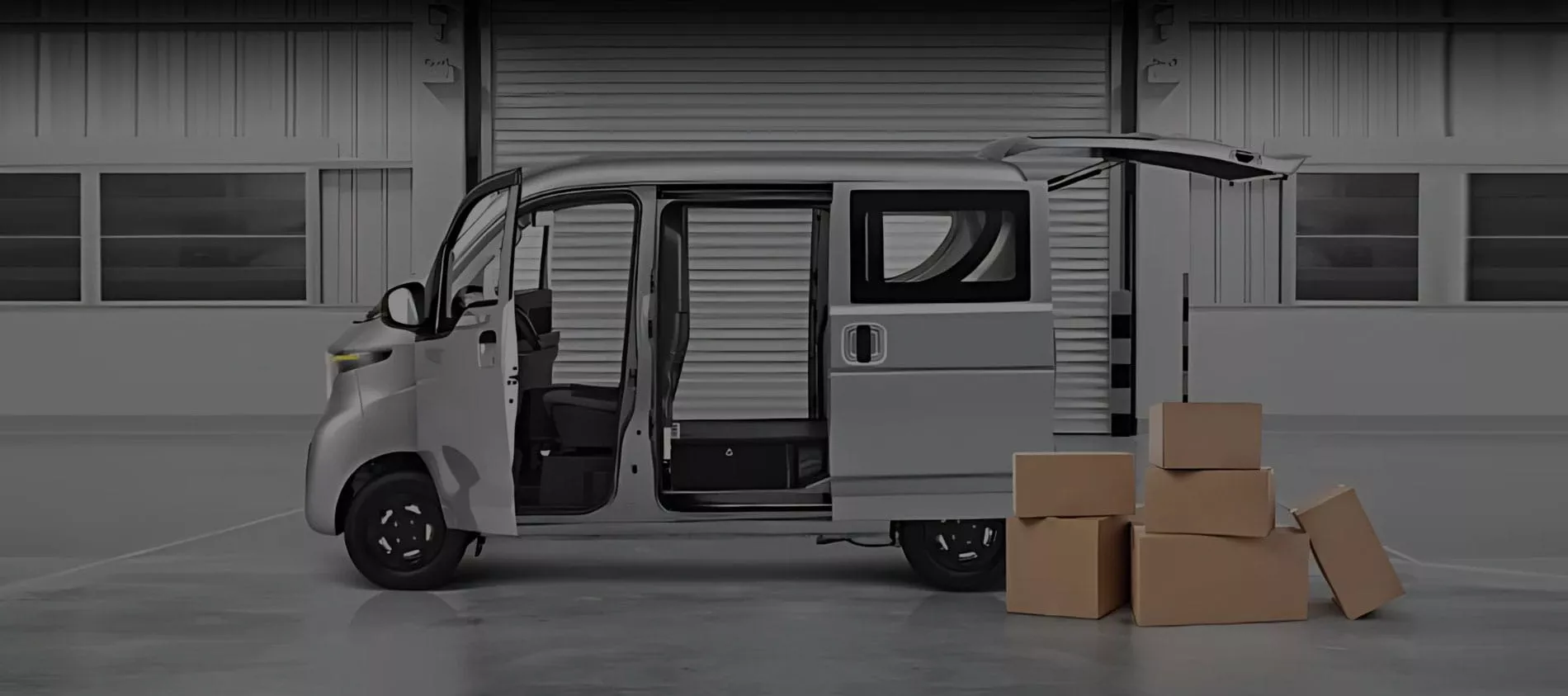
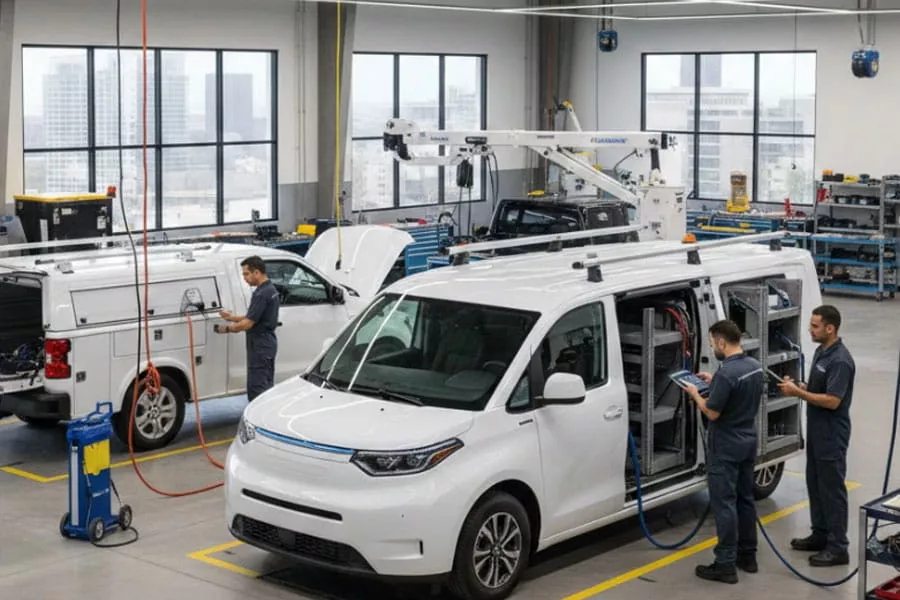
Electric work vehicles look simple from the outside. Yet inside, every business needs something different. A plumber needs pipe storage. An electrician needs safe tool space. The delivery crew needs fast access to cargo. That is where smart EV up fitting comes in.
Companies today rely on electric vehicles for daily jobs. However, buying an EV alone does not solve work needs. Each fleet vehicle must match real tasks on the road. With thoughtful changes, vehicles turn into mobile workspaces that support teams all day.
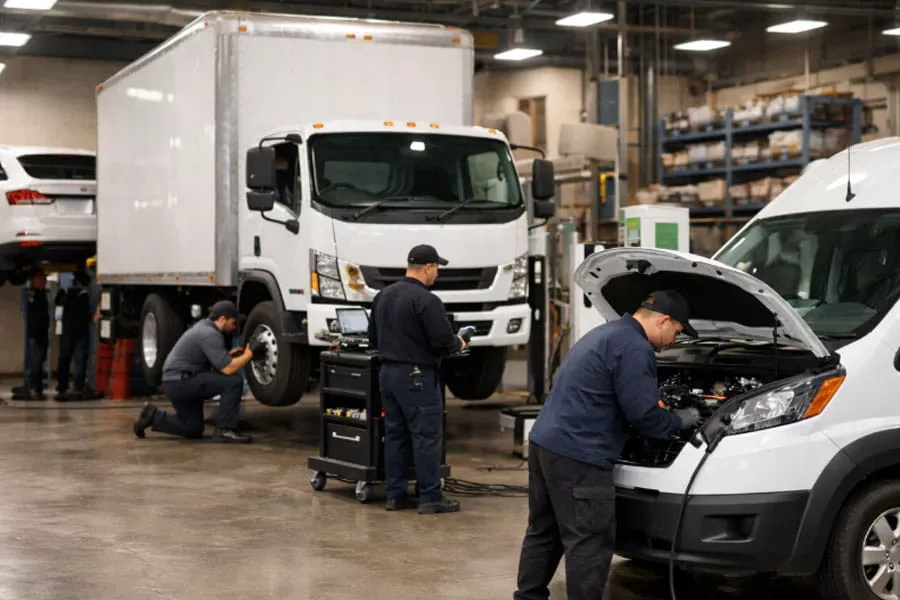
Every job site tells a different story. Some teams carry heavy tools, while others move fragile parts. Because of this, standard vans rarely meet daily demands.
Through strong upfit planning, businesses shape vehicles around real work habits. This step helps teams avoid wasted space and lost time. Also, drivers spend less effort searching for gear during busy hours.
Well planned layouts also support smoother service delivery. Workers arrive prepared instead of rearranging cargo on site. As a result, customers notice faster response and better work quality.
A work truck should feel like a moving workshop. That goal becomes possible with the right upfit solutions. Instead of empty cargo areas, vehicles gain purpose-built zones.
Custom interiors may include custom shelving that holds parts safely. Meanwhile, strong secure storage keeps costly tools locked during travel. These changes protect both workers and company assets.
Many businesses also install ladder racks for outside carrying needs. This keeps bulky items off the cabin floor. At the same time, interior space stays open for smaller gear. The result feels simple but powerful. Workers step out with everything within reach.
In comparison to fuel trucks, electric vehicles respond differently to weight. Because batteries sit low, balance becomes very important. Smart designs help distribute weight evenly across the vehicle.
Poor loading affects braking and turning control. Therefore, thoughtful layouts help improve safety for drivers and cargo alike. Even small adjustments can change daily driving comfort.
Fleet experts often review loading habits before building interiors. This careful planning ensures storage fits both tools and driving needs. So, vehicles stay stable during long city routes.
Balanced setups also support better fleet performance. Motors work efficiently when loads stay steady. Over months, this helps extend vehicle life and reduce wear.
That benefit matters greatly for companies thinking about the long-term future of their fleet.
Work vehicles spend hours on busy roads. Because of this, safety must guide every upgrade decision. Smart safety features protect workers during both travel and loading tasks. Simple additions can make a significant difference, such as:
Each improvement lowers risk across daily operations. Meanwhile, drivers feel more confident behind the wheel. Safer teams often complete tasks faster because distractions decrease.
Fleet managers often notice fewer repair claims after proper up fitting. That alone saves money over time.
Growth brings new challenges for businesses managing many vehicles. A single setup rarely works across all roles. That is why fleet managers focus on repeatable systems. When companies upfit their fleet using clear standards, training becomes easier. Drivers know where tools belong in every vehicle. So, switching vehicles causes less confusion.
Consistency also supports faster onboarding for new employees. Workers learn layouts quickly and stay productive from day one. As fleets expand, structured vehicles help maintain order. Operations stay smooth even during busy seasons.
Customers may never see vehicle interiors. Still, they feel the results of good organization. Faster arrivals and prepared teams create trust immediately.
Efficient layouts support reliable service delivery across multiple stops. Meanwhile, workers experience less stress during packed schedules.
Businesses also reduce damage to parts and equipment. Secure placement prevents shifting during transport. Over time, fewer replacements mean stronger financial control. Electric fleets already lower running costs. Combined with smart up fitting, savings grow even more noticeably.
Successful customization never happens by chance. Sound upfit planning begins before vehicles hit the road. Businesses must review routes, cargo types, and worker routines first. Such questions often guide the process:
Answers to such questions shape layouts that truly support teams. This method avoids costly redesigning later. Companies sometimes rush upgrades after purchase. However, early planning saves time and budget. Vehicles enter service fully prepared instead of needing constant adjustment.
Electric fleets continue to grow across industries. Yet success depends on how vehicles support daily work. Thoughtful customization connects technology with human needs.
Proper storage reduces clutter. Balanced loads support driving comfort. Organized interiors help workers stay focused throughout the day.
Businesses that invest early often see steady gains. Productivity rises while downtime falls. Meanwhile, teams feel supported by tools designed around their work. Over years, these benefits strengthen overall fleet operations. Vehicles last longer, and workers perform tasks with confidence.
Every business depends on reliable movement and organized tools. A well-planned EV setup turns transport into true operational support. With customized upfit solutions, companies create vehicles built for real work demands.
Fairway EV helps businesses shape electric fleets that match daily challenges. From secure storage to balanced layouts, each decision supports safety and efficiency. When companies choose to upfit their fleet with purpose, we become trusted partners on every job.
Diversity Supplier Participant


© Fairway EV. All rights reserved


